


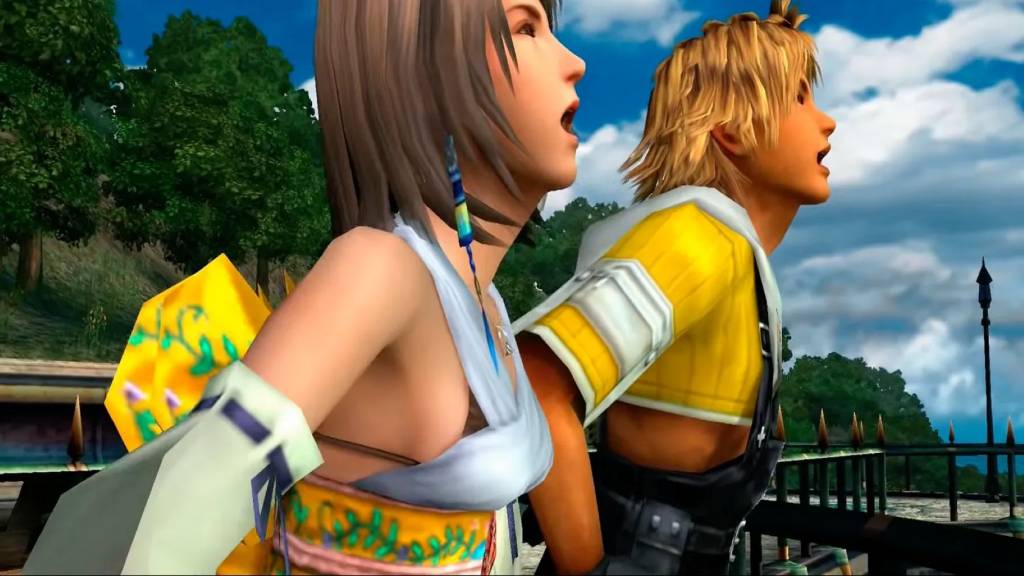
Staring blankly at the Nintendo Switch store, I wonder: Will I buy my favourite videogame for the fifth time?
Later this month, an updated version of the classic game Final Fantasy X is being released on Switch 2. It’s an update, of an update, of an update. Beyond the HD remaster of the game released in 2013, other changes to the title are marginal at best. This latest version is a Switch 2 native product that bundles in some of the perks of the PC edition.
Right now, I can still at least access the last HD remake I bought on the original Switch all those years ago, so I could have a copy of the game that I can play on the move. And as long as I keep my old PS2, I’ll always have the physical disc that came with the PS2 my parents bought for me back in 2002. That, I know, will always run.
But as developers increasingly look at ways to make more money from existing titles, often via subtle tweaks to them, I genuinely wonder whether support — or even access — for that digital version will eventually be cut to push me towards purchasing the Switch 2 update.
Such fears across the gaming community were stoked last week when Sony announced it would stop producing physical games for its consoles from January 2028. In the same announcement, as if to underline that it cares little for game longevity, it also removed support for the PS Vita and PlayStation 3 online stores.
The move from Sony is not totally unfounded. Weeks earlier, Rockstar announced that it would not sell physical copies of Grand Theft Auto 6. Any boxes sold in retail stores would contain a code that players could use to download the game. And this went down with seemingly little backlash. Sony’s announcement, however, triggered an online tirade. The company is offering a discount on its PlayStation Plus subscription as a mea culpa as fans cancel theirs in protest.
Sony is far from an outlier here. Both Nintendo and Xbox have made moves in recent years to better align their games for digital distribution. There’s a case to be made that these companies are simply meeting the market where it is: Sony announced back in its May earnings that 85% of its total game sales are digital.
But its decision more or less puts gaming in some interesting and uncharted territory for entertainment media. Despite the prolific adoption of streaming services, music and movies are still sold physically around the world.
Videogames seem poised to become the first medium to fully embrace digital-only distribution, saving publishers around $1 per physical product sold, according to Game File. Global gaming analyst firm Newzoo believes that over time, this could soften the second-hand game market, especially as disc drives are stripped from future consoles.
And all of this creates challenges, especially from a consumer affairs perspective.
The main point of contention comes from how consumers have fewer rights with digital products in contrast to their physical counterparts. Rory Mir, Director of Open Access and Tech Community Engagement at the Electronic Frontier Foundation, explains it’s the equivalent of going from owning a game to indefinitely renting it.
“Physical media comes with a ‘right of first sale,’ a copyright protection that means you can safely share, resell, alter, or destroy your own copy of a copyrighted work,” he explains, citing US law on the matter.
“But courts have held that digital media doesn’t come with this same right, meaning no such protection is offered to digital purchases.”
“Even worse, videogames are typically distributed with restrictive digital rights management software, sometimes making it a crime just to alter your game to enable things like offline play.”
Mir’s calls for regulators to balance the scales between digital ownership and physical ownership are echoed by his Australian counterpart, John Pane, Chair of Electronic Frontiers Australia.
“If companies want the commercial benefits of digital-only distribution, they must accept stronger obligations to protect users,” he said.
“EFA keenly recognises digital platforms can and do create systemic consumer and competition harms that ordinary after-the-fact enforcement may not fix.”
“But the Australian Competition and Consumer Commission (ACCC) has not yet given Australians a clear digital ownership right, a right to continued access to purchased digital media, or a comprehensive game preservation framework. Those are the next steps policymakers should be considering.”
While consumer rights groups are pushing for stronger protections, there’s also a view that our current framework in Australia, at least, may deter the worst possible practices. That’s the view of intellectual property and technology lawyer for Thomson Geer, Briar Francis.
The one loophole she sees that could land publishers in trouble in Australia is if they misrepresent consumers’ rights at the checkout. Interestingly, this very point is currently being tested in a Californian court. Four gamers are suing Sony for using words like “buy” and “purchase” when the terms and conditions outline that they are more or less renting the game indefinitely from the company.
Francis is also keeping an eye on how Australia’s new unfair trading practices regime, coming into effect in 2027, will interact with the digital sale of games, which will influence how online platforms represent their products, and also put in place stronger protections for consumers on subscription services.
But despite showing some confidence in Australia’s framework, Francis still believes it can go a bit further. “As a gamer, I’d like to see my digital licence entitle me to some sort of ‘legacy’ access to an archived version of the game I purchased, if it is ever cut from support or sunsetted,” she said.
Regardless, there’s a sense of inevitability lurking over this debate. Games are going fully digital and there’s little that can be done. Funnily enough, fatalism is a key theme in Final Fantasy X too. Its main characters struggle against an overwhelmingly inevitable conclusion, and somehow on their journey find a means to overcome it. Maybe the push from consumer advocates and the courts is our version of that loophole, a chance to defy an ending everyone says is already written, where as gamers we are somehow paying the same for less.
But for now, I guess, I’ll get my credit card ready.
What do you think about the move to digital-only gaming? Does the convenience outweigh the loss of rights? Will the scales be balanced eventually? Let me know in the comments.
